WhatsApp vs Telegram vs Signal: Complete Comparison Guide
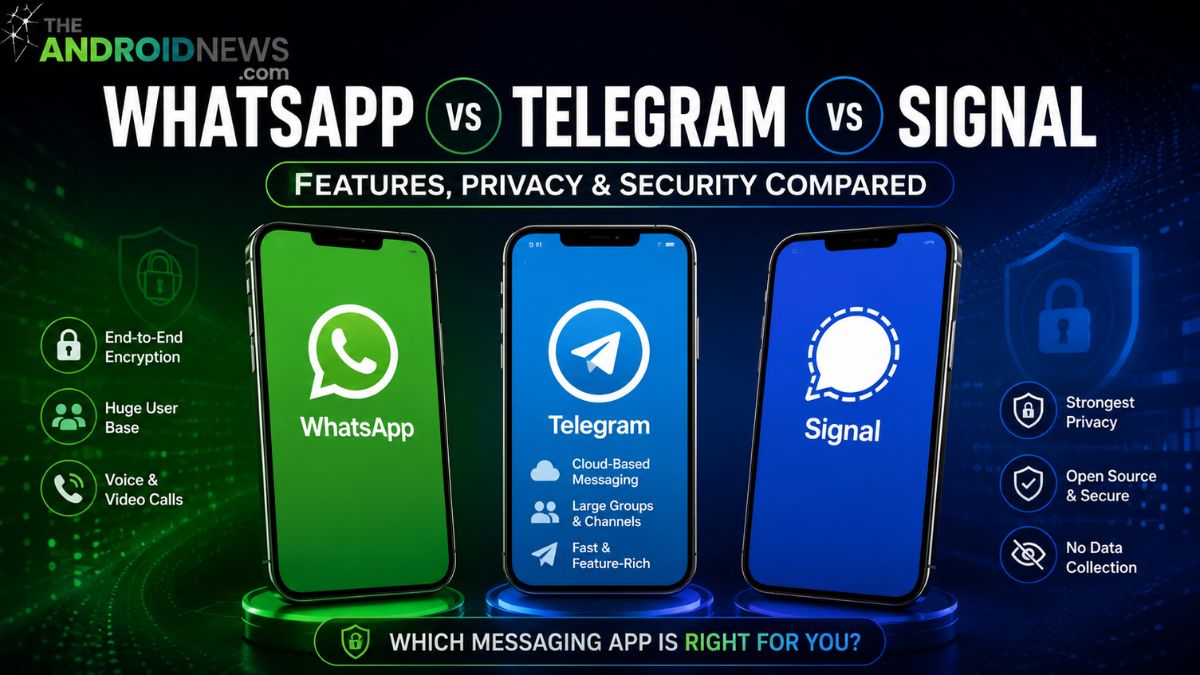
Over 2 billion people rely on WhatsApp for their daily communications. With increasing concerns about privacy and security, alternatives like Telegram and Signal are rapidly gaining traction. In this article, we’ll dive into the critical features, differences, and strengths of WhatsApp vs Telegram vs Signal, helping you navigate which messaging app best suits your needs.
With recent privacy scandals making headlines, it’s more important than ever to stay informed through reliable sources like latest Android news. In this showdown of WhatsApp vs Telegram vs Signal, we’ll explore the unique features that set these apps apart and what they mean for your privacy and user experience.
Introduction to WhatsApp, Telegram, and Signal
WhatsApp has transformed the way we communicate, offering an intuitive design that appeals to users across demographics. Its end-to-end encryption ensures that personal chats remain private, a critical feature in a time when data security is paramount.
Telegram has rapidly established itself as a formidable contender in the messaging app landscape, often compared to giants like WhatsApp and Signal. Its standout feature is its cloud storage, enabling users to access messages and media from multiple devices without the fear of losing important content.
Signal operates on an open-source model, meaning anyone can scrutinize its code for vulnerabilities. This transparency not only fosters trust but ensures that the platform adheres to stringent encryption standards. In a digital landscape often marred by data breaches and privacy infringements
Privacy and Security Comparison
WhatsApp, owned by Meta, offers end-to-end encryption by default, yet its data-sharing practices with the parent company raise eyebrows. Telegram offers a unique blend of privacy and functionality.
It provides the option for end-to-end encryption with its “Secret Chats,” regular messages are stored on Telegram’s servers, making them susceptible to government requests and potential hacks. Signal utilizes open-source cryptography and does not store metadata, making it the go-to application for the privacy-conscious user.

WhatsApp offers end-to-end encryption by default, walks a fine line. The encryption ensures that only the sender and receiver can access messages, a feature that instills confidence among users. The fact that WhatsApp is owned by Meta means it inevitably collects user data such as phone numbers, contacts, and usage information.
Telegram

Telegram offers a range of robust security features, but its regular chats are not fully end-to-end encrypted by default. This means that while your messages are relatively secure, they reside on Telegram’s cloud and can be accessed if necessary. To gain maximum privacy, users must manually enable “Secret Chats,” which are not stored on Telegram’s servers and provide the level of encryption that many privacy-conscious individuals expect.
Signal
Signal prides itself on minimizing data collection to an absolute minimum. This commitment to user privacy is further reinforced by its open-source code, allowing independent security researchers to verify its encryption protocols. Signal’s features extend beyond just messaging. With functionalities such as disappearing messages and encrypted voice/video calls, it caters to privacy-conscious users seeking comprehensive security in their digital communications.
Data Collection of WhatsAapp
When comparing data collection practices among WhatsApp, Telegram, and Signal, it’s crucial to highlight how these platforms approach user privacy and data management. WhatsApp, owned by Meta, is often criticized for its extensive data collection methods, which include gathering metadata from messages, contact lists, and location services.
Telegram adopts a more user-centric approach, allowing for optional cloud storage and the ability to create ephemeral messaging features. However, it still collects some user data to enhance its functionalities.
Signal sets itself apart by implementing a strict data-minimization philosophy. It collects virtually no metadata, ensuring that your conversations remain confidential. This principle is attractive for users concerned about surveillance and data misuse.
WhatsApp stands out for its extensive information gathering compared to competitors like Telegram and Signal. WhatsApp’s approach is largely driven by its need to provide robust business tools and analytics capabilities, which involve tracking user interactions and engagements.
Telegram
Telegram’s approach is notably more privacy-centric. Telegram collects less user data, with a focus on maintaining user anonymity, yet it retains the capability to store chats on cloud servers. This presents an intriguing paradox: while users may appreciate a reduced data footprint, cloud storage can raise questions about data security and ownership.
Signal
Signal stands out for its minimalist approach, collecting the least amount of personal data among its competitors. Unlike WhatsApp, which integrates user data for targeted advertising, Signal prioritizes user privacy by ensuring that chats are end-to-end encrypted and that it doesn’t store metadata on its servers.
Pros and Cons of WhatsApp
WhatsApp’s user-friendly interface makes it an attractive option for individuals and businesses alike, providing seamless communications with just a few taps. The platform’s robust end-to-end encryption enhances users’ sense of security, potentially making it a preferred choice. WhatsApp boasts a substantial user base, which allows for easy connectivity with friends, family, and colleagues without the hassle of switching apps.
This popular messaging service comes with its share of drawbacks. The collection of user data despite the encryption raises persistent concerns, especially among those increasingly aware of digital privacy. Limitations in customization can make WhatsApp feel generic compared to the more versatile options available through Telegram and Signal.
Pros and Cons of Telegram
Telegram’s standout feature is its cloud-based messaging, allowing users to access their chats from multiple devices simultaneously. This flexibility is especially beneficial for those who switch between devices throughout the day, enabling seamless communication without losing any history. Telegram’s support for large groups and channels can accommodate thousands of members, making it an ideal platform for communities, businesses, and influencers looking to distribute content widely.
Telegram’s adoption comes with notable drawbacks. While its messaging capabilities are impressive, end-to-end encryption is not the default setting, which raises red flags for privacy-focused users. This concern is compounded by issues surrounding fake channels and rampant spam, making it essential for users to stay vigilant about the sources they engage with.
Pros and Cons of Signal
Signal stands out in the messaging landscape for its robust privacy protection, lauded for its end-to-end encryption by default. Unlike other platforms such as WhatsApp and Telegram, Signal is designed with minimal data collection, meaning users can engage in conversations without worrying about the potential exploitation of their personal information.
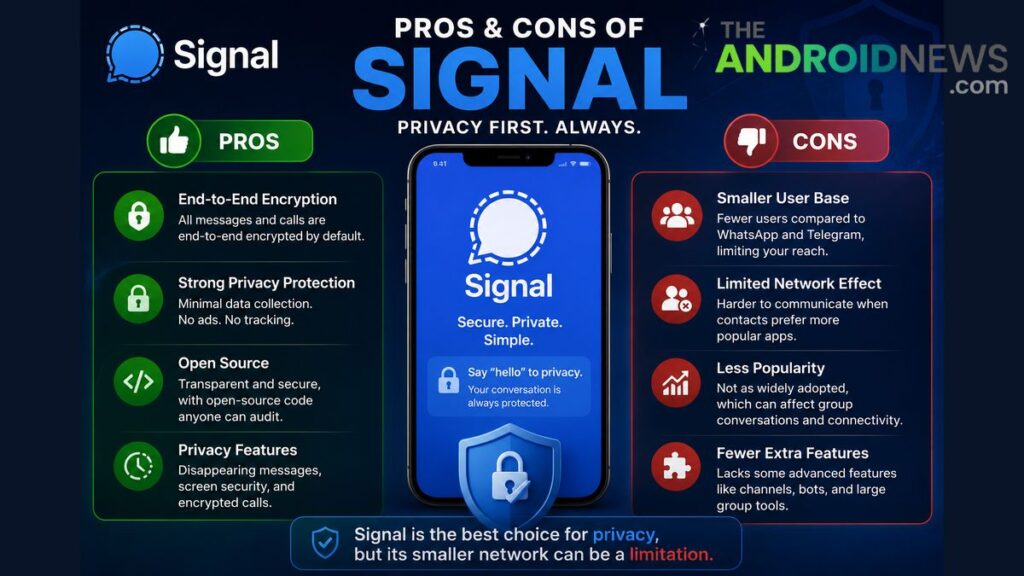
Signal’s smaller user base compared to giants like WhatsApp and Telegram can be a double-edged sword. While its focus on security means fewer distractions from ads and promotions, the limited network can hinder communication, especially when your contacts prefer more popular platforms.
What is the Best Messaging App?
According to my personal experience WhatsApp is the best messaging app. WhatsApp stands out for its comprehensive features, including not just instant messaging but also robust voice and video call capabilities. Its end-to-end encryption ensures that your conversations remain private, making it a compelling choice for users who prioritize security without sacrificing convenience.
Conclusion
WhatsApp vs Telegram vs Signal offers unique features catering to different user needs, the choice ultimately depends on what you value most in a messaging app. WhatsApp excels in user familiarity and widespread adoption, making it ideal for connecting with friends and family. Telegram stands out with its diverse functionalities and robust group features, perfect for community engagement.
FAQs
Which is better to use, WhatsApp or Telegram?
Choosing between WhatsApp and Telegram ultimately depends on your specific needs and preferences. WhatsApp is known for its user-friendly interface and a robust set of features for personal communication, including an extensive user base that makes it easy to connect with friends and family.
Why do people use Telegram instead of Signal?
People often choose Telegram over Signal for its versatility and feature-rich environment. Telegram offers a wide array of functionalities, such as channels, bots, custom stickers, and extensive multimedia sharing options. These features make it appealing for both casual users and content creators who want to engage with larger audiences.
Why is the Signal app not popular?
Signal, while praised for its strong focus on privacy and security, struggles with popularity due to a few key factors. First, the app’s user base is often limited by its reliance on phone numbers for authentication, which can deter those who prefer more anonymity or who are accustomed to using platforms that allow for broader forms of identification.