Google Launches Android 17 with Next-Gen Multitasking, Improved Foldable Gaming, and Security Overhauls
Google has launched Android 17 for supported Pixel devices, rolling out the final build months ahead of its usual fall release window.
The earlier release marks a shift toward a more adaptive release cadence, arriving alongside the June 2026 Pixel Feature Drop and Wear OS 7.
This stable rollout arrives right after a surprise Android 17 Beta 4.1 patch that quietly resolved final connectivity and UI bugs. Per Google Blog, the update focuses on multitasking, entertainment, and stronger anti-theft biometrics.
Pixel users get access first, while other eligible devices will receive the update gradually throughout the rest of 2026.
Multi-Window Bubbles and Screen Reactions
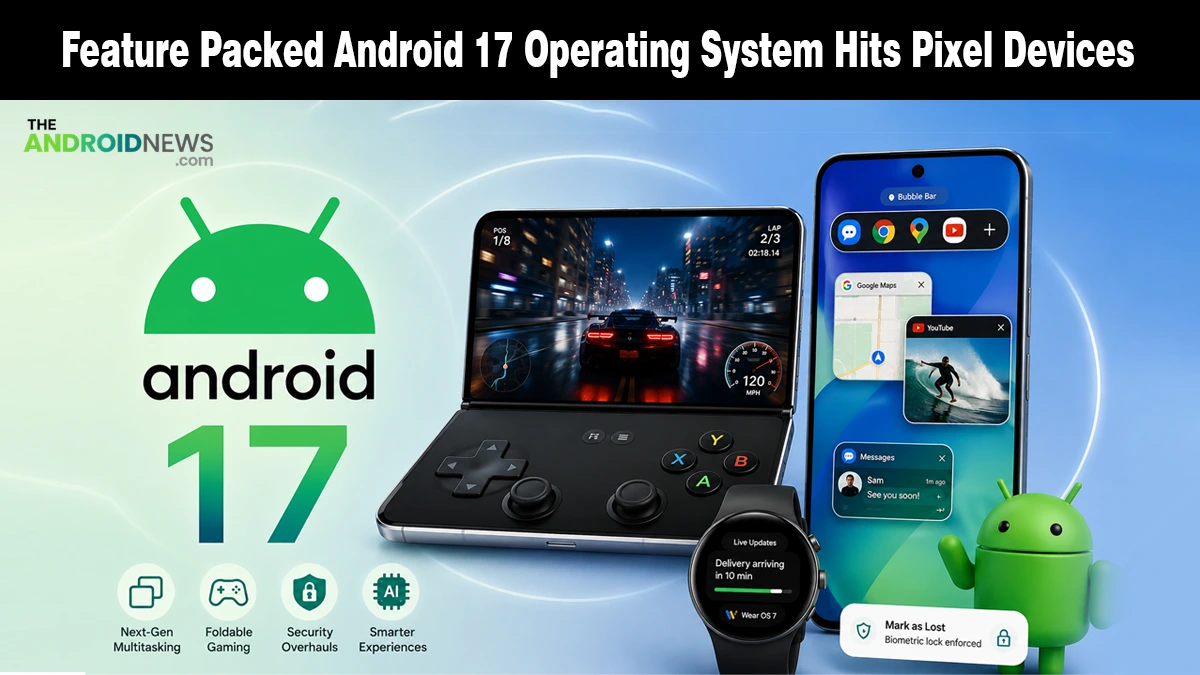
The most immediate user-facing interface upgrade in Android 17 is the expansion of “Bubbles.” As reported by 9to5Google, this feature completely redefines mobile multitasking by moving beyond simple messaging threads.
Users can now long-press any app icon on the launcher to transform it into a compact, floating window that hovers dynamically over active tasks.
On larger displays like foldables and tablets, the update integrates a dedicated system “Bubble Bar” at the bottom margin of the screen, allowing users to dock, resize, or maximize floating utilities with a single tap.
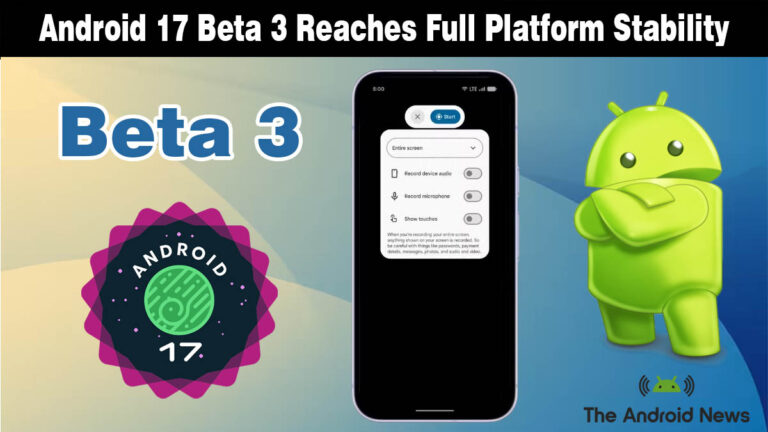
Simultaneously, content creators receive a native screen recording overhaul called “Screen Reactions.”
As detailed by Mashable, this addition introduces a floating pill interface that lets users capture phone displays while natively superimposing a front-facing selfie camera video.
This allows for seamless walkthroughs and reaction videos directly from the Quick Settings menu without requiring third-party green-screen utilities.
Foldable Gaming Layouts and Biometric Locks
Mobile gaming and device security receive significant structural updates. Foldable smartphones running Android 17 gain a native “foldable gaming mode,” splitting the unfolded screen into a 50/50 layout; top for gameplay and bottom as a dynamic digital gamepad.
Google has also introduced stricter background RAM caps to reduce memory leaks and improve frame stability.
On security, the Find Hub platform adds an upgraded “Mark as Lost” feature, allowing owners to enforce biometric locks if a device goes missing.
This keeps thieves locked out even if they bypass the passcode and prevents disabling of background location tracking. Runtime location permissions also now offer clear one-time options for precise or approximate coordinates.
Expanded AI Features, Wear OS 7 Integration and Eligible Devices
The June Feature Drop, building on the June 2 feature drop foundations, brings multimodal AI upgrades to the Pixel ecosystem, powered by Gemini Omni.
It introduces conversational video editing, letting users remix clips, add text prompts, and generate AI avatars directly on-device.
Google’s Lyria 3 audio model also arrives on Pixel devices, turning text prompts or images into full music tracks with customized styles and tempos.
The update is deploying in a staged, over-the-air rollout phase over the next week, depending on carrier availability. Eligible devices include the entire Pixel 6 series up through the newest Pixel flagship models, alongside the Pixel Tablet and Pixel Fold.
The update extends to Wear OS 7 on the Pixel Watch lineup, adding Android Live Updates for real-time tracking of deliveries and sports.
It also enhances Emergency Sharing, where a detected fall, loss of pulse, or crash can automatically alert emergency contacts via the connected Pixel phone.