Android 17 Theft Deterrents and Material 3 Overhauls Hit Google System Updates
Google’s background infrastructure is quietly undergoing its most significant maintenance cycle of the year. The mid-month rollout of the May 2026 Google System Updates is now deploying globally, bringing important enhancements to Google Play Services v26.19 and Android System WebView v149.
While these components usually update silently behind the scenes, this release delivers meaningful user-facing security protections, refined UI improvements, and better feature support for automotive interfaces.
Material 3 Storage and Auto Credential Expansion
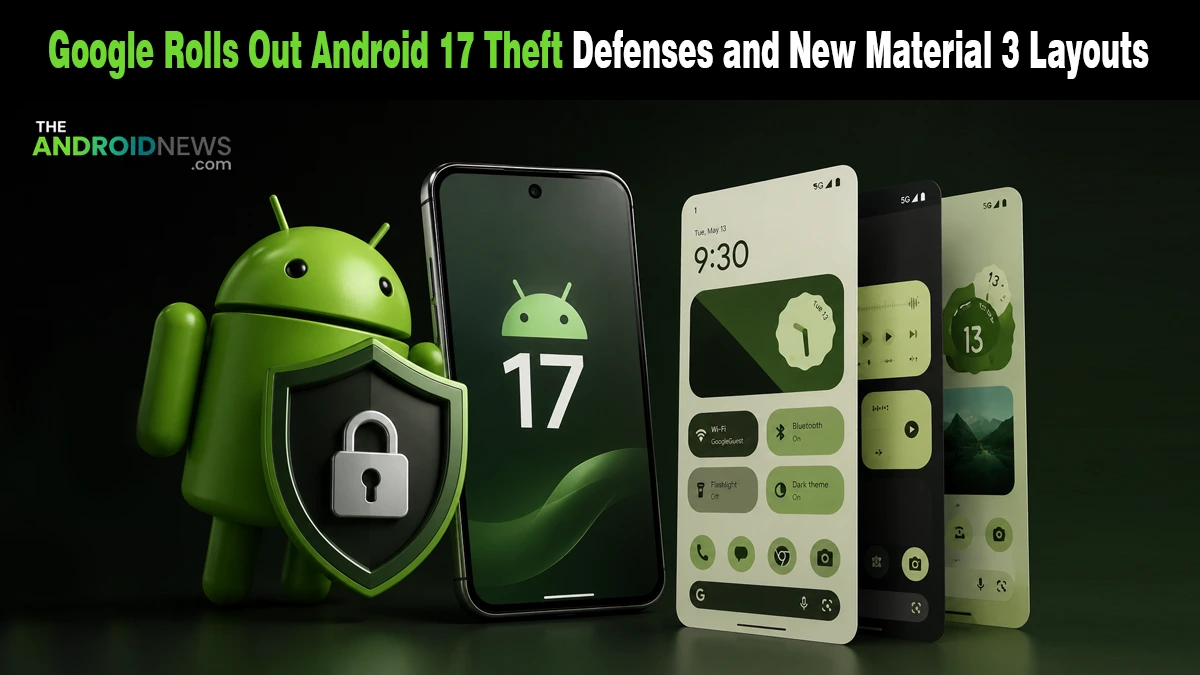
According to a detailed breakdown by 9to5Google, Play services v26.19 introduces a redesigned local storage management screen, rebuilt with the Material 3 Expressive UI, the modern visual style seen in Google’s recently redesigned apps like YouTube Music.
The interface swaps old modular layouts for dynamic, highly scannable data bars, providing cleaner transparency regarding how first-party apps use device memory.
Concurrently, Google is expanding its security footprint directly into the dashboard. This version marks the official arrival of Android Credential Manager on Android Auto.
Drivers can now access their saved account passwords and passkeys seamlessly from an in-car display, with the system adding a bidirectional option to utilize a connected smartphone for secondary authentication.
Android 17 Default Theft Protection and WebView Security
The backend update strengthens core security for the upcoming Android platform release.
Official documentation confirms that Remote Lock and Theft Detection Lock will be enabled by default on newly activated Android 17 devices. A new retail-focused Theft Protection framework is also rolling out to freshly set up devices in the UK.
To support transparency, Google now triggers an analytics prompt whenever users attempt to disable Advanced Protection mode.
On the rendering side, Android System WebView v149 is now widely rolling out, bringing targeted security fixes and experimental developer hooks to improve how third-party apps handle rich web content with greater stability.
Together, this May update cycle aligns Android phones, wearables, and automotive systems under a more unified privacy and security baseline.