OpenAI Is Building Its Own Phone, and It Is Designed to Kill the App Grid
The smartphone you are holding right now runs on a simple assumption: you open an app to get something done. Want to send money? Open a banking app. Want to order food?
Open a delivery app. OpenAI is building a phone designed to make that logic obsolete, and it just got more real. Apple analyst Ming-Chi Kuo of TF International Securities said on X that OpenAI is working with MediaTek and Qualcomm on custom smartphone processors for a dedicated AI phone.
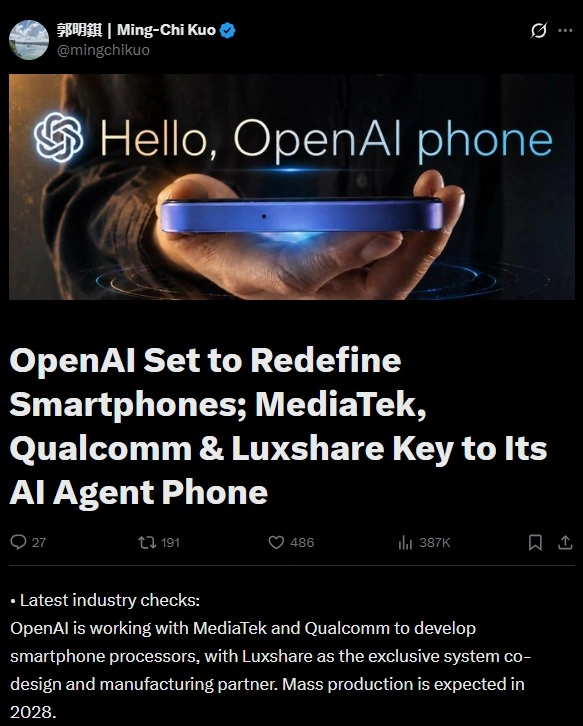
Luxshare, a Chinese manufacturer that has spent years trying to break into Apple’s supply chain, will be the exclusive co-design and manufacturing partner. Mass production is targeted for 2028.
What OpenAI Is Actually Building
According to Android Authority, Kuo’s analysis confirms that OpenAI’s custom chip will prioritize power consumption management, memory hierarchy, and on-device small-model execution, with heavier AI tasks handed off to cloud infrastructure.
That two-layer design means the phone handles fast, context-aware tasks locally while offloading demanding workloads to the cloud.
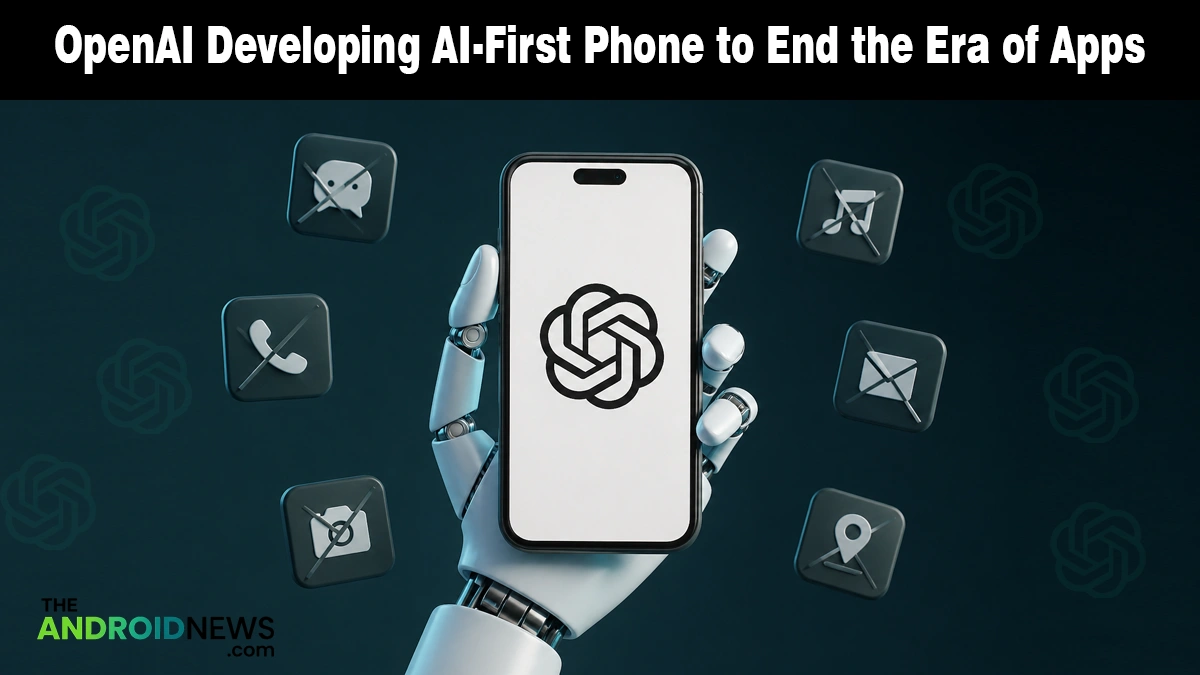
The purpose is this: instead of tapping icons on a home screen, you state a goal, and the phone’s AI agent completes it. Booking a flight, sending money, ordering food; the AI handles the full workflow invisibly, without you touching a single app manually.
Reports also note that Kuo confirms an always-on context engine that continuously tracks activity, people around you, and typical needs, building persistent awareness so responses feel anticipatory rather than reactive.
Why OpenAI Cannot Do This Inside Android
OpenAI already has over 900 million weekly ChatGPT users on Android and iOS. The reason the company still wants to design a phone is that Android’s rules get in the way.
Every third-party app, including ChatGPT, operates inside Google’s permission model, Play Store guidelines, and system-level boundaries that limit what an AI agent can actually control.
For OpenAI to build a phone where AI manages your entire digital life, it needs to own the operating system and the silicon underneath it.
The business model follows Apple’s playbook. OpenAI would bundle hardware with subscriptions, creating a locked ecosystem similar to how Apple uses iCloud and Apple Intelligence to retain users.
The phone becomes both a product and a distribution channel, potentially the most powerful one the company has built.
While today’s Android smartphones prioritize hardware, OpenAI’s device succeeds only if its AI agent runs your life flawlessly.
When Can You Expect It
The OpenAI phone is not the first product on the roadmap. A screenless, palm-sized AI device designed with former Apple chief designer Jony Ive comes first, originally targeting late 2026, now pushed toward early 2027.
The smartphone follows after, with chip specifications finalized by late 2026 or Q1 2027 and mass production in 2028.
Until then, most users will experience early versions of this shift through existing AI apps like ChatGPT, which mirrors the agentic experience but still operates within the app grid model that OpenAI aims to replace.
The App Era May Have an Expiration Date
OpenAI is not the only company thinking this way.
Google and Samsung are already pushing agentic experiences, but they remain focused on staying ahead of the daily cycle of Android news and app-based competition. Still, neither can fully replace the app model since they rely on it for revenue.
OpenAI has no such conflict. If it pulls this off, the smartphone you are using today will look very different by the time the OpenAI phone ships.